






Watch Winders – Precision Care for Automatic Timepieces
An automatic watch is a living mechanism. Gears, rotors, and lubricants work in harmony—powered by motion—to keep perfect time. When that motion stops, accuracy, convenience, and long-term performance can suffer. This is where a watch winder becomes essential.
At Wclocks, we design watch winders for collectors who value precision, silence, and refined presentation. This guide explains how watch winders work, why they matter, and how to choose the right one for your collection.
What Is a Watch Winder?
A watch winder is a motorized device that gently rotates an automatic watch, mimicking the natural movement of the wrist. This motion keeps the mainspring wound so the watch continues running when it’s not being worn.
A quality watch winder:
-
Maintains accurate time
-
Preserves calendar and complication settings
-
Prevents lubricants from settling
-
Reduces wear caused by frequent resetting
For collectors who rotate watches—or own complicated movements—a watch winder is both a convenience and a form of mechanical care.
Why Automatic Watches Benefit from Watch Winders
Automatic watches are engineered to operate continuously. When left unworn for days or weeks, they stop. Restarting them repeatedly can be inconvenient and, over time, less than ideal for certain complications.
Key Benefits of Using a Watch Winder
Time & Convenience
No more resetting time, date, or moonphase. Your watch is always ready.
Movement Health
Consistent motion helps keep oils evenly distributed inside the movement.
Accuracy Preservation
A running watch maintains stable regulation compared to one that repeatedly stops.
Collector Efficiency
Perfect for owners who rotate between multiple automatic watches.
Types of Watch Winders
Choosing the right winder depends on how many watches you own and how you use them.
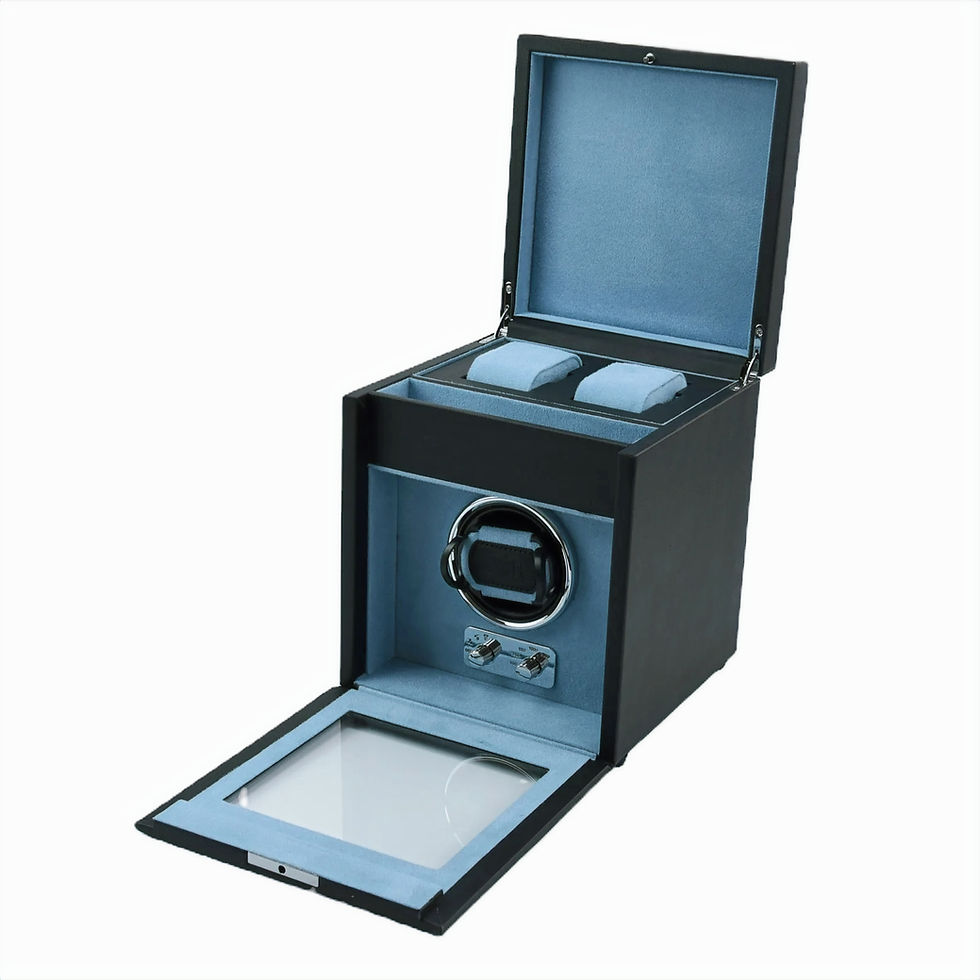
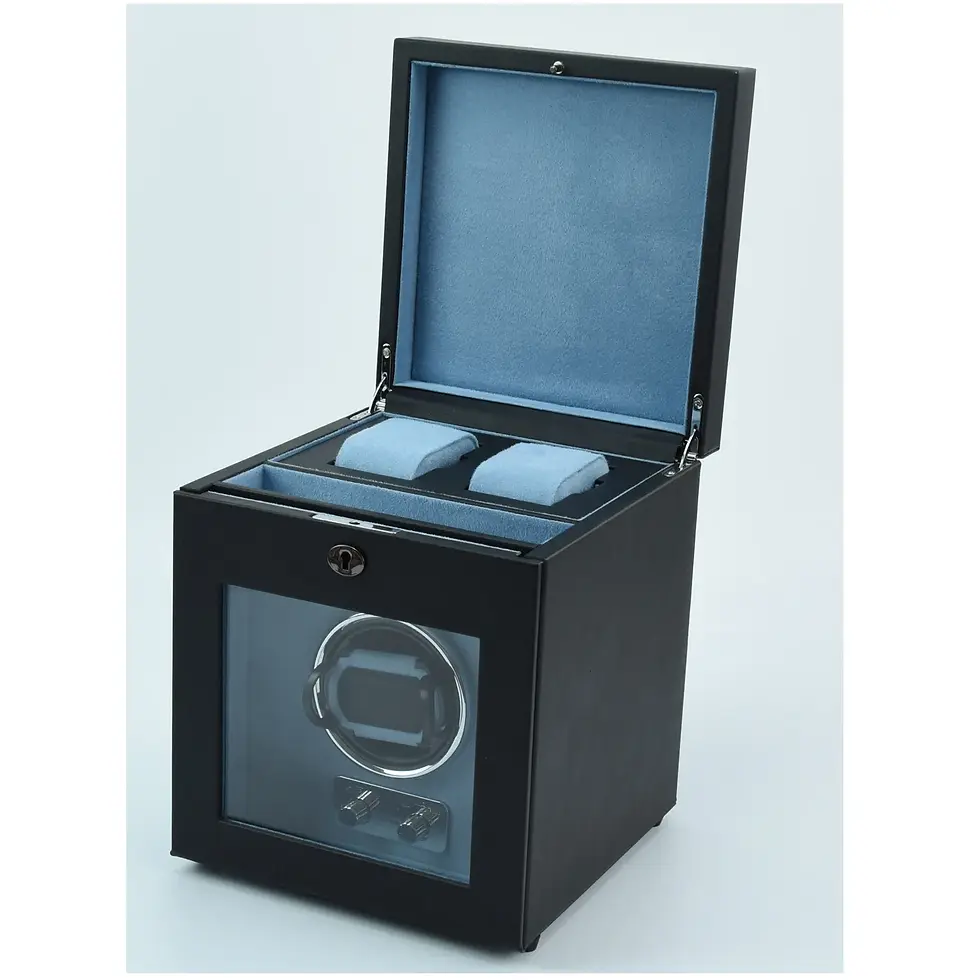
Single Watch Winder
Ideal for daily wearers who alternate between wrist time and storage. Compact, elegant, and space-efficient.
Double Watch Winder
Designed for collectors with two core pieces in rotation. Offers balance between function and footprint.
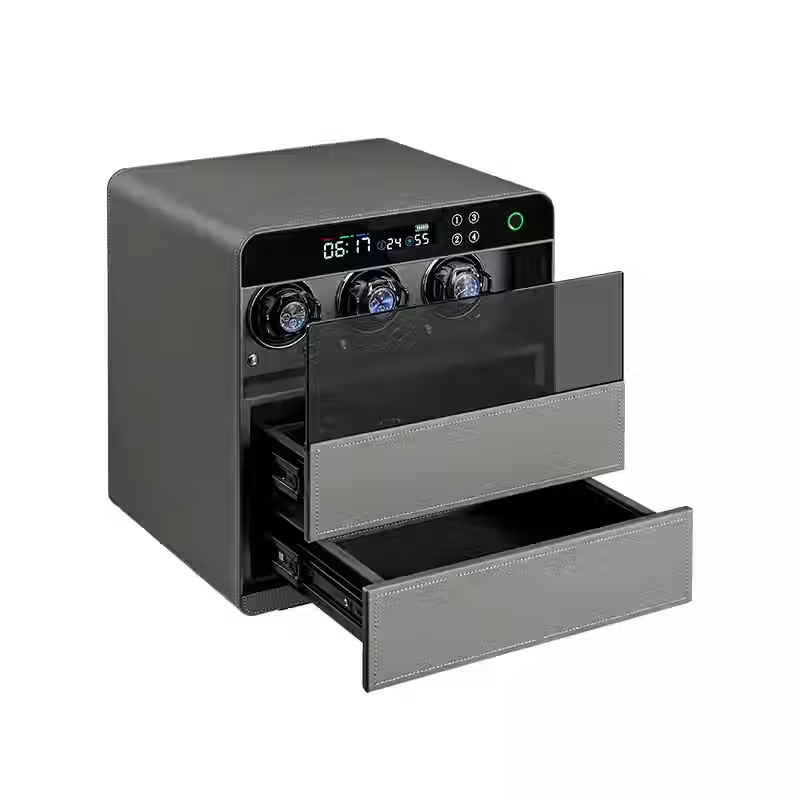
Multi-Watch Winders & Cabinets
Built for serious collections. These units combine winding slots with secure storage for additional watches, often featuring locking doors and LED lighting.
How Watch Winders Work (Simply Explained)
Most modern watch winders operate using programmable cycles:
-
Clockwise rotation
-
Counterclockwise rotation
-
Bidirectional rotation
-
Rest periods between cycles
These settings—often referred to as TPD (Turns Per Day)—ensure the watch stays wound without over-rotation. High-quality winders use quiet, stable motors and controlled movement to protect the mechanism.
How to Choose the Right Watch Winder
A watch winder should be selected with the same care as the watch itself.
1. Motor Quality & Noise Level
Premium winders use high-grade motors engineered for near-silent operation, suitable for bedrooms or offices.
2. Adjustable Rotation Settings
Different movements require different winding patterns. A good winder offers multiple modes to suit various automatic watches.
3. Cushion & Case Compatibility
Modern watches range widely in size. Cushions should securely hold cases up to large diameters without stressing straps or bracelets.
4. Power Options
-
AC power for permanent setups
-
Battery operation for flexibility or travel
5. Design & Materials
A watch winder is often displayed openly. Materials like wood, leather, acrylic, and soft interior linings elevate both protection and aesthetics.
Watch Winders for Luxury & Complicated Watches
High-end automatic watches often feature:
-
Date windows
-
GMT functions
-
Annual or perpetual calendars
These complications are time-consuming to reset. A watch winder keeps everything aligned, saving time while maintaining mechanical consistency.
Collectors understand that a luxury watch isn’t just worn—it’s cared for. A proper winder becomes part of that care routine.
Are Watch Winders Safe for Automatic Watches?
Yes—when properly designed.
A quality watch winder:
-
Uses controlled rotation cycles
-
Includes rest periods
-
Avoids continuous spinning
-
Matches real wrist motion
Poor-quality winders can over-rotate or vibrate excessively. This is why build quality, motor precision, and intelligent programming matter.
Why Collectors Choose Wclocks Watch Winders
At Wclocks, every watch winder is designed with a collector’s mindset. We focus on the elements that truly matter:
-
Whisper-quiet motor technology
-
Balanced rotation cycles with rest intervals
-
Secure, adjustable cushions for modern watch sizes
-
Elegant designs that complement luxury interiors
Our winders are not made to impress with gimmicks—but to perform reliably, silently, and beautifully for years.
Watch Winder FAQs
Do I need a watch winder if I wear my watch daily?
Not necessarily—but it’s useful if you rotate watches or want a dedicated display.
Can a watch winder damage my watch?
A high-quality winder with proper settings will not damage your watch.
How many turns per day does my watch need?
Most automatic watches operate well between 650–1,000 TPD. Quality winders offer preset modes to cover this range.
Is a watch winder worth it for one watch?
Yes, especially for complicated watches or collectors who value convenience and presentation.
Keep Your Automatic Watches Ready—Always
A watch winder is more than a luxury accessory. It’s a practical tool that preserves precision, protects your movement, and keeps your timepiece ready for every moment.
Discover premium watch winders at Wclocks—engineered for silence, designed for collectors, and built to care for the watches you value most.